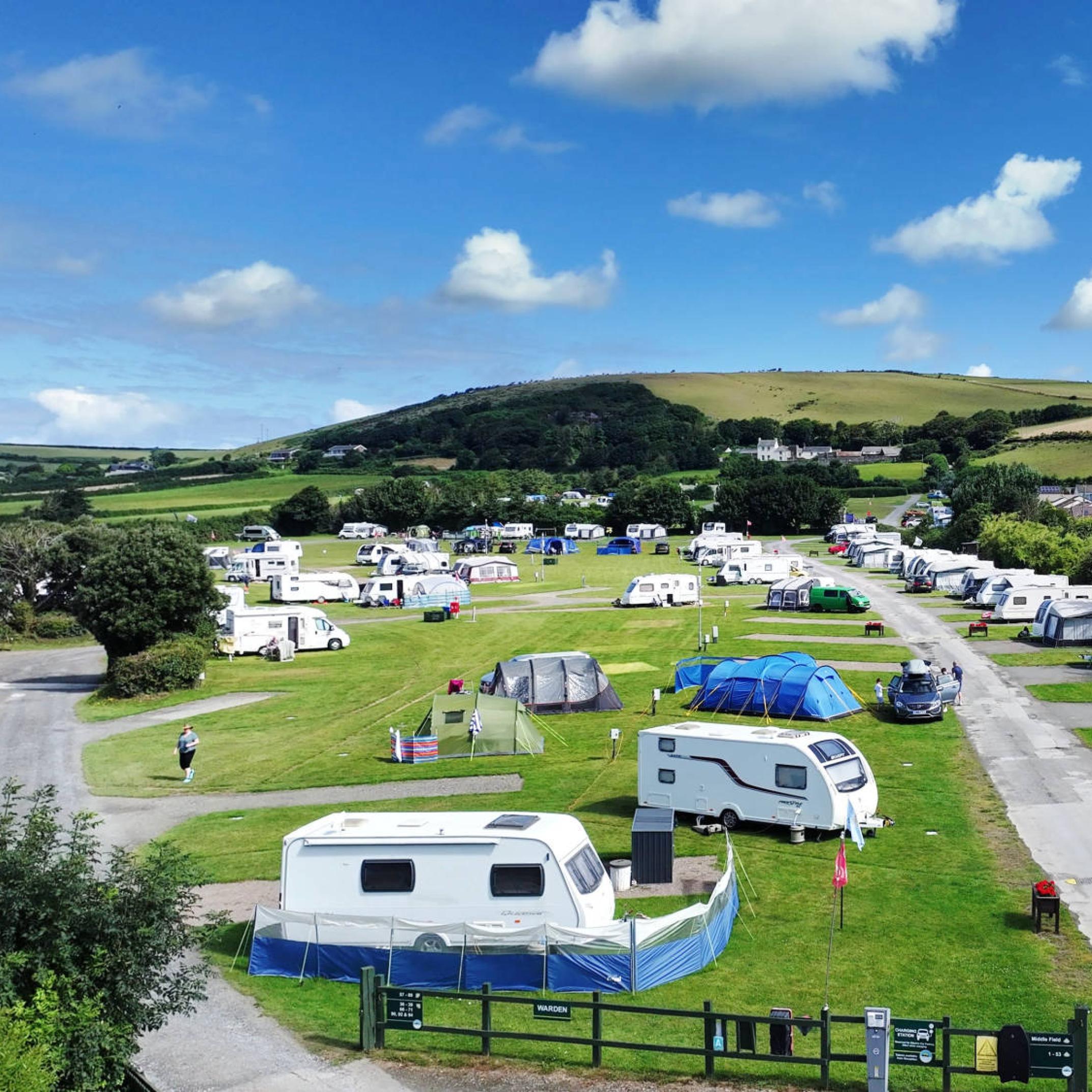
From October 2026 every paid overnight stay in Wales has to be registered with the Welsh Revenue Authority, including tent and touring pitches, glamping pods and static caravans. It is free to register, the deadline is 31 March 2027, and the penalties for missing it start at £100 per premises. If your site is in Wales, there's a new administrative job landing this autumn, and it isn't optional.
From October 2026, the Welsh Revenue Authority opens registration for its new visitor accommodation register. Anyone who takes bookings for overnight stays in Wales — for one night, a season, or year-round — has to register, and the guidance is explicit that this covers more than hotels and cottages. It names pitches for tents, touring caravans, motorhomes and campervans, plus glamping structures (shepherd's huts, yurts, pods) and static caravans. If you take a booking and money changes hands, you're in scope.
What you actually have to do
Registration is done online through GOV.UK One Login once it opens in October 2026. You'll need contact details, the accommodation types you offer, where the premises is, which seasons you operate, how many units you have, and maximum occupancy. It's free — there's no fee for registering itself.
The deadline is 31 March 2027, and that applies whether or not your local council goes on to introduce the separate visitor levy (that's a different, later decision each council makes on its own timetable — registration is the bit that's definitely happening, everywhere in Wales, on this schedule).
What happens if you don't
Miss the deadline and the Welsh Revenue Authority can issue a penalty of £100 per premises to start. If you still haven't registered after they've been in touch, that can escalate to a total of £1,400 per premises. Parts of the register will also be public, so guests will be able to check whether a site is properly registered before they book.
Registration and the levy are not the same thing — but here is what the levy will cost, when a council switches it on
Registration is universal and starts on the schedule above. The levy itself is a separate, local decision: each council has to consult, then give a year's notice, before it can start charging — the earliest any council in Wales can switch it on is April 2027, and only councils that choose to.
When a council does switch it on, the rate for a campsite or touring pitch is 75p per person, per night — lower than the £1.30 rate that applies to hotels, cottages and other accommodation. Anyone under 18 staying on a campsite pitch or in a shared room is exempt from the charge entirely, so a family of four on a touring pitch pays for the adults only, not the children.
What one Welsh site has already decided to do about it
Dan yr Ogof caravan site, in the Bannau Brycheiniog (Brecon Beacons) National Park, announced it is becoming adults-only from 14 September — and named the visitor levy as part of the reasoning. Owner Ashford Price said his staff were uncomfortable with the idea of charging families for babies who spend most of a stay indoors in a cot, on top of the wider cost-of-living pressure a per-head charge adds for larger families.
Worth being precise about what this does and doesn't show: under-18s on a campsite pitch are exempt from the levy itself, so the charge Dan yr Ogof's owner is reacting to isn't the campsite rate described above — it reads more as a stance taken ahead of the detail settling, and a site's own commercial decision either way. It's included here not as a template to copy, but because it's a real, on-record example of an operator thinking through the administrative and guest-facing side of this now, well before any council has actually switched a levy on. Whether or not adults-only is the right call for your own site, working out how you'd explain a per-night charge to a family of four — and whether any of your guests are exempt — is worth doing before a council in your area gives its year's notice, not after.
Why this is worth doing early, not at the deadline
Six months sounds like plenty of runway, but the same pattern shows up with every new compliance scheme: the people who register in the first few weeks do it in ten minutes with the details to hand, and the people who leave it to March are the ones chasing occupancy figures and unit counts against a deadline while also running a full season. If you run more than one type of unit — say touring pitches and a couple of glamping pods — have your numbers for each ready rather than working them out on the day.
If you're not in Wales
England and Scotland are on their own, separate timelines for accommodation registration (England's national register for short-term lets has been confirmed in principle but wasn't operating as of mid-2026; Scotland's short-term let licensing has been in force for a while already and varies by council). This one is Wales-specific — worth knowing if you run sites either side of the border, because "we already registered" in one nation doesn't cover the other.
Whichever nation you're in, HolidayPitches gives you one place to see your pitch counts, unit types and occupancy by season — exactly the numbers this kind of registration asks for — without a monthly fee. See how it works for touring sites, or register your site free to get set up before the season gets busy again.