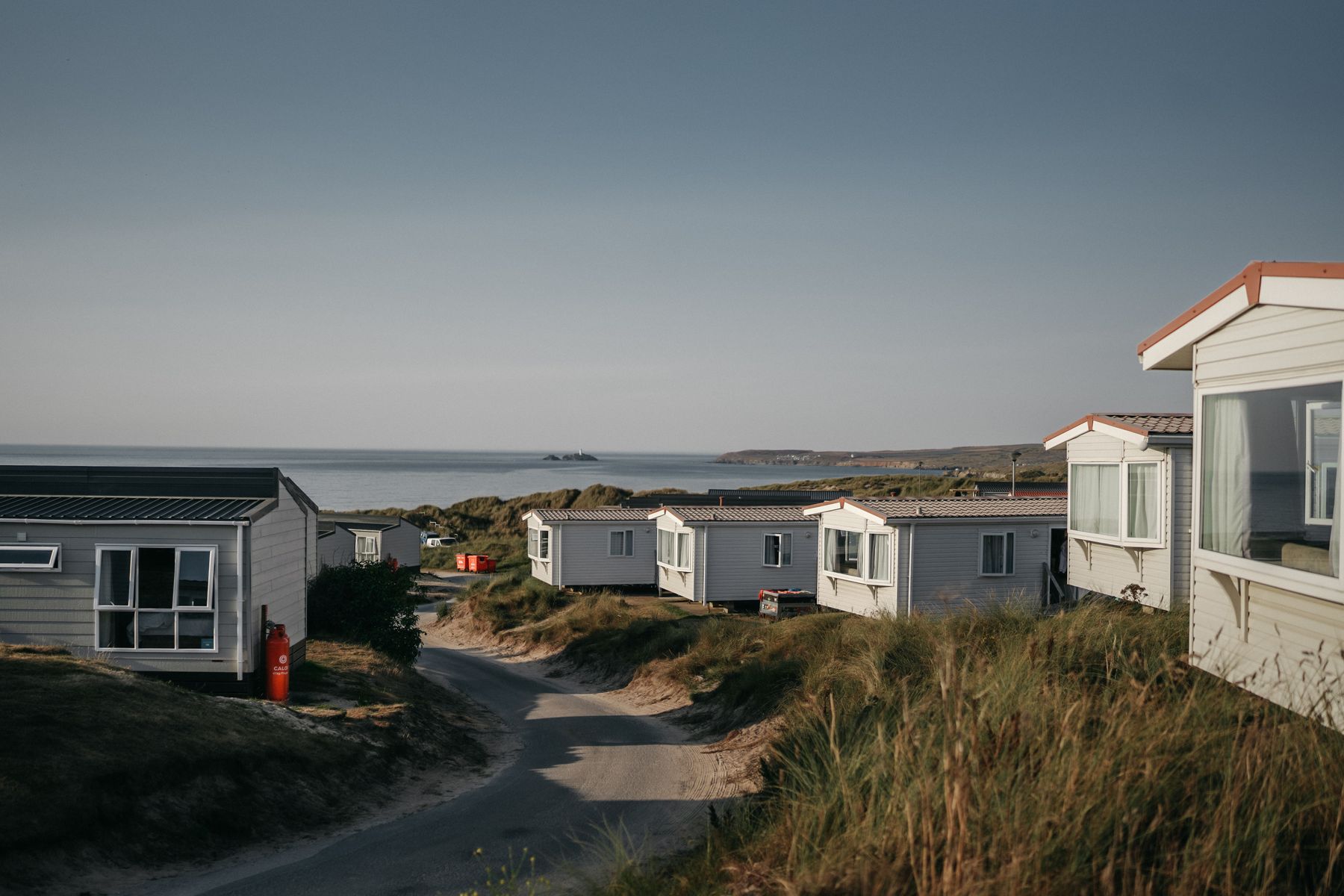
Tarbert Holiday Park, on the Argyll coast where the Caledonian MacBrayne ferry to Islay and Jura docks, has lodged a planning application with Argyll and Bute Council for 25 new lodges and four self-contained glamping pods, plus extra parking for cars and tourers. The reference is 25/01766/PP, and the council is expected to decide by mid-November.
Two things make this worth reading even if you have never been near Tarbert. First, the application is part-retrospective — some of what it covers, including two of the lodges, is already built, and two of those lodges are proposed for residential rather than holiday use. Second, the park’s own explanation for the demand is not holidaymakers at all: it is CalMac, one of the area’s main employers, and the contractors on nearby infrastructure projects, both needing somewhere for staff to stay, in and out of season.
Why a park applies for permission after building, not before
A part-retrospective application is a planning submission covering work that has already gone up, usually alongside new work that has not. It is not illegal — councils deal with them often — but it is a weaker position than applying first: the council can still refuse, and refusal after the event means a real building to take down or repurpose, not just a shelved drawing. Several of the planning stories on this page this month (Heritage Park, Greenhowe, Lydstep) turn on exactly this gap between what got built, or assumed, and what permission actually covers. Tarbert’s application is not in that position yet — it is going through the council properly — but any operator building ahead of a decision is taking on the same risk: if the committee says no, what is already standing has to come down or change use, at your cost, not theirs.
The more useful lesson: workforce accommodation as a second income stream
Tarbert’s own case for the expansion leans on CalMac and construction demand all season and in the off season — in other words, bookings that do not follow the holiday calendar at all. For a lodge or pitch that would otherwise sit empty from October to March, a contract let to a ferry operator, utility contractor or event crew fills exactly the gap that a holidaymaker-only business model cannot.
It is not a fit for every site. Workforce accommodation usually means longer stays, different wear on units, and a different kind of guest-portal and invoicing need (a company account paying monthly, not a family paying on arrival) — and it only works where there is genuine local demand: a ferry terminal, a wind farm, a housing development, a utilities project. But where that demand exists, it is worth treating as a real second line of business rather than an occasional favour to a local firm, with its own pricing, its own terms, and a system that can actually invoice a business rather than only take a card payment from a guest.
Nothing about Tarbert’s application is decided yet. Argyll and Bute Council’s planning portal is the place to watch it; a decision is expected by mid-November.